Editorial | Volume 3 Issue 1 - 2026
Madan Mohanrao Jagtap*
Assistant Professor, Symbiosis Institute of Operations Management, Nashik Campus, Constituent of Symbiosis International (Deemed University), Pune, Maharashtra, India
*Corresponding Author: Madan Mohanrao Jagtap, Assistant Professor, Symbiosis Institute of Operations Management, Nashik Campus, Constituent of Symbiosis International (Deemed University), Pune, Maharashtra, India.
January 26, 2026
The Fourth Industrial Revolution—often referred to as Industry 4.0—is reshaping the global manufacturing landscape through digital transformation and intelligent automation. At the heart of this transformation lies Artificial Intelligence (AI), a catalyst enabling machines and systems to learn, adapt, and make decisions with minimal human intervention. When AI integrates with advanced manufacturing technologies such as the Internet of Things (IoT), cyber-physical systems (CPS), robotics, and big data analytics, the result is a new paradigm: AI-driven smart manufacturing. This paradigm not only enhances productivity and competitiveness but also fosters a sustainable industrial ecosystem aligned with global environmental and social goals.
Traditional manufacturing systems operate on pre-programmed, deterministic processes with limited adaptability. In contrast, smart manufacturing systems infused with AI possess the ability to sense, analyze, and respond dynamically to changing conditions. Predictive analytics allow machines to anticipate faults before they occur, thereby minimizing downtime and conserving resources. AI-driven quality inspection systems using computer vision can detect microscopic defects in products, ensuring near-zero defects and waste reduction. Furthermore, reinforcement learning algorithms are increasingly used to optimize production parameters in real time, reducing energy consumption and maximizing throughput.
These advancements translate directly into sustainability gains. Predictive maintenance minimizes material wastage by extending the lifecycle of machinery and components. Energy management systems, guided by AI algorithms, analyze consumption patterns to identify inefficiencies and optimize power usage, enabling manufacturers to meet sustainability benchmarks such as ISO 50001. Moreover, AI-enabled design tools assist engineers in selecting eco-friendly materials and developing lightweight, recyclable products, contributing to circular economy principles.
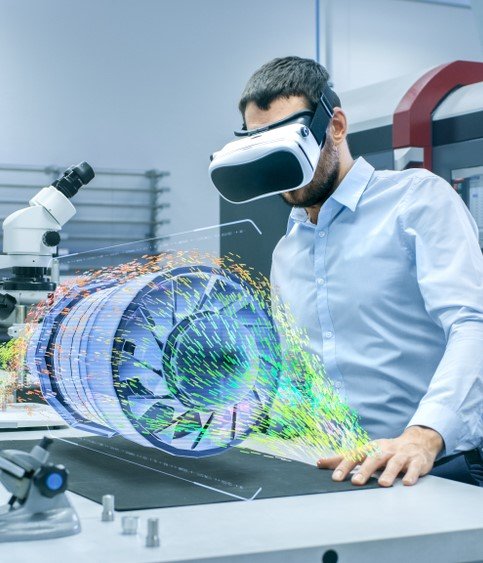
A smart factory functions as a network of cyber-physical systems that continuously communicate through IoT-enabled devices. AI serves as the “brain” of this digital nervous system—analyzing real-time data streams from machines, sensors, and production lines. By coupling AI with digital twins—virtual replicas of physical systems—manufacturers can simulate and optimize production processes before implementation, drastically reducing time, cost, and environmental impact.
For example, in automotive and aerospace sectors, AI-driven digital twins are used to test product designs under simulated conditions, predicting failure points and material performance without the need for physical prototypes. This not only accelerates innovation but also prevents resource-intensive trial-and-error practices, reinforcing the sustainability of industrial operations.
The success of AI in manufacturing depends heavily on data quality and accessibility. Factories generate vast amounts of data daily—from sensors, control systems, and enterprise software—but much of it remains underutilized. Effective data management frameworks are essential to extract actionable insights while ensuring cybersecurity and privacy. AI can then convert this data into intelligent decision-making, guiding resource allocation, process scheduling, and logistics with greater precision.
Sustainability is no longer an optional consideration but a strategic imperative. Governments and industries worldwide are aligning with international frameworks such as the United Nations Sustainable Development Goals (SDGs) and the Paris Agreement on climate action. AI can directly contribute to these targets by enabling low-carbon manufacturing, waste minimization, and supply chain transparency. AI-based life cycle assessment (LCA) tools, for instance, can evaluate the environmental impact of products from raw material extraction to end-of-life disposal, supporting informed decision-making toward greener alternatives.
Despite its transformative potential, the road to AI-driven sustainable manufacturing is not without obstacles. One of the foremost challenges is data fragmentation—disparate data formats and incompatible legacy systems hinder seamless integration across production networks. Skill gaps also pose a major hurdle, as manufacturers require a workforce adept in AI programming, data analytics, and system integration. Without adequate training and reskilling initiatives, the digital divide between large corporations and small-to-medium enterprises (SMEs) may widen, slowing the pace of transformation.
Another concern lies in energy-intensive AI models themselves. Large-scale computation for machine learning and deep learning requires substantial power, which can paradoxically increase the carbon footprint if sourced from non-renewable energy. Ethical considerations—such as algorithmic transparency, data ownership, and workforce displacement—must also be addressed to ensure that AI adoption aligns with societal well-being.
To harness AI’s potential responsibly, a multi-stakeholder approach is vital. Governments should establish supportive policies that promote innovation through tax incentives and research grants while enforcing standards for data governance and cybersecurity. Academia can contribute by developing open-access AI frameworks tailored for industrial applications, reducing dependency on costly proprietary solutions. Industry consortia, meanwhile, can facilitate knowledge sharing and interoperability standards, enabling SMEs to participate actively in the digital transformation journey.
Collaboration is also essential at the international level. Developing nations can benefit from technology transfer programs, joint research centers, and digital infrastructure funding. By democratizing access to AI technologies, the global manufacturing community can ensure that sustainability and inclusiveness remain central to the Industry 4.0 vision.
The evolution toward AI-driven smart manufacturing represents more than a technological upgrade—it signifies a philosophical shift in how industries perceive progress. Efficiency, once measured solely by production speed and profit, now encompasses carbon reduction, ethical sourcing, and social responsibility. The fifth industrial revolution (Industry 5.0), already on the horizon, envisions even closer collaboration between humans and intelligent systems, emphasizing personalization, creativity, and sustainability.
AI, when deployed thoughtfully, bridges this transition by augmenting human capabilities rather than replacing them. It enables decision-makers to design systems that are resilient, adaptive, and sustainable, aligning business objectives with environmental stewardship. As industries worldwide embrace digital transformation, it is imperative to ensure that technological intelligence evolves hand in hand with ecological and ethical wisdom.
AI-driven smart manufacturing is redefining the boundaries of industrial performance and sustainability. From predictive analytics to digital twins and circular economy integration, AI empowers industries to operate with greater efficiency, transparency, and environmental responsibility. Yet, realizing the full potential of this transformation requires strategic investment, workforce development, and a unified commitment to sustainability principles.
The factories of the future will not merely be automated—they will be autonomous, intelligent, and sustainable. As we enter this new era of Industry 4.0, the goal should be clear: to ensure that the intelligence we embed in our machines translates into wisdom for our planet.
Madan Mohanrao Jagtap. “AI-Driven Smart Manufacturing for Sustainable Industry 4.0". Clareus Scientific Science and Engineering 3.1 (2026): 01-03.
© 2026 Madan Mohanrao Jagtap. Licensee Clareus Scientific Publications. This article is an open access article distributed under the terms and conditions of the Creative Commons Attribution (CC BY) license.
| Acceptance rate | 40% |