Editorial Note | Volume 2 Issue 10 - 2025
M Kalyan Phani*
Department of Metallurgical and Materials Engineering, O.P. Jindal University, India
*Corresponding Author: M Kalyan Phani, Department of Metallurgical and Materials Engineering, O.P. Jindal University, India.
December 02, 2025
DOI: 10.70012/CSSE.02.065
In an era when global climate goals are becoming binding commitments rather than policy options, the steel industry stands at a decisive juncture. Responsible for nearly eight to eleven percent of global carbon dioxide emissions, steel production remains among the most carbon-intensive industrial activities. Transitioning this foundational industry towards sustainable production is therefore vital to achieving net-zero ambitions. Green steel technologies which employ low- or zero-carbon manufacturing methods are emerging as the cornerstone of this transformation.
Towards Understanding Green Steel
Green steel broadly refers to steel produced without the conventional blast furnace route that relies on coke and coal for iron ore reduction. Instead, it utilises cleaner processes such as hydrogen-based direct reduction, renewable electricity-powered melting, and extensive use of recycled scrap. India’s recently proposed green steel taxonomy sets a benchmark for this transition: steel emitting less than 1.6 tonnes of CO? equivalent per tonne of finished product qualifies for a top-tier “green” certification. Thus, the “greenness” of steel lies not in its appearance but in the sustainability of its production route.
Significance of the Transition
Steel is integral to the global economy—underpinning infrastructure, transportation, manufacturing, and energy systems. As global demand for steel continues to rise, the sector’s decarbonisation becomes central to mitigating climate change. A sustainable steel value chain can substantially reduce emissions across related sectors, enabling greener cities, cleaner transportation networks, and more sustainable industrial growth. If traditional steelmaking persists without change, its emissions could offset progress made by other industries. Hence, decarbonising steel is not merely desirable it is indispensable for global climate stability.
Technological Pathways Driving Change
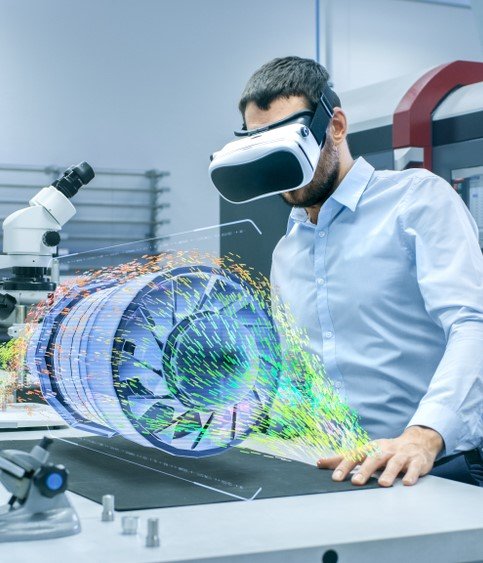
Several technological approaches are shaping the next generation of steelmaking. Hydrogen-based direct reduction (H-DRI) replaces coke with hydrogen, producing water vapour instead of carbon dioxide. Electric Arc Furnaces (EAFs), when powered by renewable electricity, enable efficient melting of scrap or direct reduced iron with minimal emissions. The increasing use of digital technologies automation, process simulation, and data-driven optimisation further enhances energy efficiency and operational control. Additionally, circular economy principles, through extensive recycling and material recovery, are reinforcing sustainability within the steel sector. Collectively, these innovations represent a paradigm shift from resource-intensive to resource-resilient steelmaking.
Challenges in Implementation
The road to green steel, however, is far from straightforward. The technologies involved demand high initial investment, reliable access to renewable power or green hydrogen, and extensive industrial adaptation. Transforming the entire supply chain from mining to downstream processing requires both policy coherence and industrial coordination. Moreover, while pilot initiatives worldwide have demonstrated potential emission reductions of up to 90–95 percent, commercial scalability remains a pressing challenge. Without targeted incentives and clear regulatory frameworks, the cost disparity between conventional and green steel may slow adoption.
The Indian Context and Opportunities
For India, the transition to green steel presents both a national imperative and a strategic opportunity. With a rapidly expanding steel sector and a growing renewable energy capacity, India is uniquely positioned to lead in this domain. Academic and research institutions can play a catalytic role by focusing on hydrogen metallurgy, electric arc furnace optimisation, and digital process control. Strong industry-academia partnerships can translate laboratory-scale innovations into industrial-scale solutions. Policymakers, on their part, must ensure the development of standards, certification systems, and incentive structures that promote large-scale implementation of green technologies.
Conclusion
Green steel represents not merely a technological advancement but an ethical and environmental responsibility. The 21st century demands a reimagined steel industry one that aligns industrial growth with planetary well-being. Universities, researchers, policymakers, and industrial leaders must collaborate to drive this transformation. The industry that once symbolised the backbone of civilisation must now embody sustainability and innovation. Those who lead in green steel development will not only contribute to global climate solutions but also usher in an era of cleaner, smarter, and more resilient industrial progress.
M Kalyan Phani. “Green Steel Technologies — Forging a Low-Carbon Future for a Heavy Industry". Clareus Scientific Science and Engineering 2.10 (2025): 38-39.
© 2025 M Kalyan Phani. Licensee Clareus Scientific Publications. This article is an open access article distributed under the terms and conditions of the Creative Commons Attribution (CC BY) license.
| Acceptance rate | 40% |